Yemaya Project: Call 2022 – Ka1 – Learning Mobility Of Individuals – Staff Mobility For Teaching And Training Activities Between Programme And Partner Countries 2025

🌍 YEMAHA Women in Science Project: Empowering Female PhD Researchers in Mining-Impacted Communities
The Technische Universität Bergakademie Freiberg (TUBAF), Germany, in collaboration with the Consortium for Sustainable Development in Africa (CoSuDAf), is proud to implement the YEMAYA Women in Science project. This initiative aims to build the capacity of female PhD candidates and university faculty to address the complex environmental and socio-economic challenges associated with mining in Africa.
The CoSuDAf consortium brings together five leading African universities:
- University of Nigeria, Nsukka (UNN), Nigeria
- Machakos University (MKsU), Kenya
- Taita Taveta University (TTU), Kenya
- University of Mines and Technology (UMaT), Ghana
- University of Environment and Sustainable Development (UESD), Ghana
As part of its practical and community-focused approach, the YEMAYA project has adopted a YEMAYA Village concept to depict areas/communities adversely affected by illegal mining. The goal is to rehabilitate the mined-out environment, with a strong focus on soil and water restoration, while empowering local communities and encouraging inclusive, science-driven solutions.
The YEMAYA Women in Science project continues to champion gender equity, sustainable development, and research excellence across continents. By building transdisciplinary and transnational bridges, the initiative is creating a strong foundation for inclusive, African-led solutions in environmental and mining sciences.
🎓 PhD Mobility Programme and Capacity Building at TUBAF
Through the Erasmus+ Mobility Programme, the second cohort of female PhD candidates from partner universities is currently undertaking a 6-month fully funded research traineeship at TUBAF. The training, which runs from 1st April to 30th September 2025, allows the students to work on aspects of their doctoral research while gaining valuable international experience and mentorship.
A mid-term presentation session was organized as part of their academic assessment. This event was structured to coincide with a face-to-face capacity building programme involving country coordinators, local supervisors, and TUBAF faculty. Key representatives of the CoSuDAf team present during this period included Dr. Mary Nellima, Dr. Veronica Okello, Dr. Cynthia Boye, and Dr. Fatima Eshun together with key supervisors and management team from the various listed Africa universities.
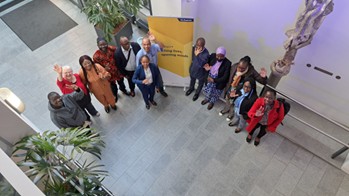
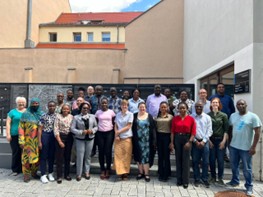
Figure 1: Country Coordinators and Supervisors participating in the exchange programme at TUBAF, Germany, June 2025; Participants of the 2025 YEMAYA exchange program at TUBAF, June 2025.
🧠Structured Capacity Building for Partner Institutions
The Capacity Building Programme for country coordinators and key team members from the African partner institutions was held at TUBAF from 19th–27th June 2025. From 23rd–27th June, they were joined by the local supervisors of the female PhD candidates for an intensive week of joint activities and institutional networking.
The programme commenced with a strategic meeting with Prof. Dr. Tobias Fieback, Vice Rector of TUBAF. He introduced participants to new academic programmes being introduced at the university—including underwater diving, the interdisciplinary structure of courses, and efforts to promote community participation in mine planning, technology transfer, and enhancing TUBAF’s global appeal to international students. Prof. Fieback also reaffirmed TUBAF’s commitment to supporting African partner universities through ongoing collaboration.
🔬 Workshops, Visits, Knowledge Exchange, and Future Planning
The exchange included a variety of capacity-building activities such as:
Lectures and workshops on:
- Translating Research Ideas into Business Models
- Safeguarding Good Research Practice
- Teaching for Tomorrow
- Professional Communication
Laboratory visits, including:
- The Helmholtz Institute Freiberg for Resource Technology
- Environmental Remediation Labs discussing bio-mining/bio-leaching projects
- Labs hosting the PhD candidates for technical review and knowledge exchange
Field visit to the Freiberg Silver Underground Mine, currently used for teaching and research, offering real-world insight into responsible mining practices.
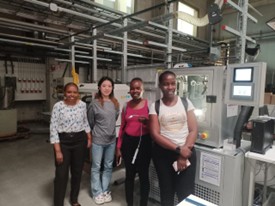
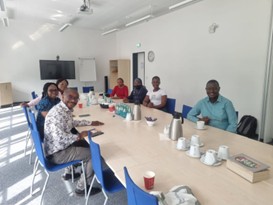
Figure 2. Participants visit the Electrospinning Laboratory at TUBAF; Participants awaiting presentations from staff from the Helmholtz Institute Freiberg for Resource Technology as part of the institutional engagement and learning exchange. The week also featured small group discussions, strategic planning for the actualization of the YEMAYA Village, and networking between African institutions and TUBAF professors. Notably, collaborations with the African community in Freiberg added a cultural and personal dimension to the trainees’ European experience.