
YEMAYA Project Empowers Female PhD Researchers Through International Research Traineeship at TU Bergakademie Freiberg, Germany

Three female PhD candidates from partner universities are currently participating in the third cohort of the YEMAYA Research PhD Traineeship, a fully funded six-month research and training programme hosted by the Freiberg University of Mining and Technology (TU Bergakademie Freiberg, Germany). The programme provides advanced research training and international exposure aimed at equipping women scientists with the knowledge and skills needed to develop sustainable solutions to environmental challenges, particularly those affecting mining communities.
The successful candidates are:
- Grace Akyaa Adarkwa (University of Mines and Technology, Ghana) – Dewatering of Birimian Tailings with Filter Press: Characterization and Value Addition of Filtered Products.
- Esther Korlekie Odoi-Darko (University of Environment and Sustainable Development, Ghana) – Assessment of Heavy Metal Contamination: Bioavailability and Human Health Risks in Water and Sediments of Mining-Impacted Fish Farms in Ghana.
- Sharon Wanjiru Kibera (Taita Taveta University, Kenya) – Biogas Production and Refinement to Biomethane: Optimization, Purity and System Sustainability for Energy Transition.

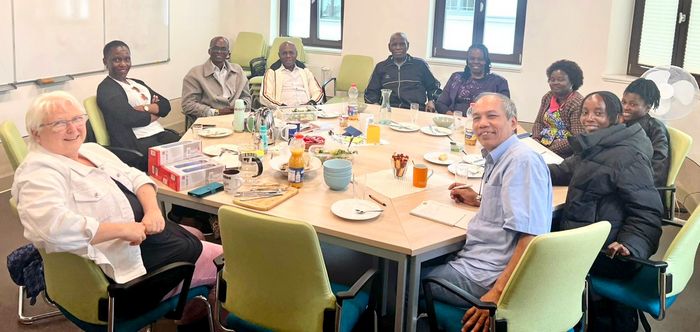
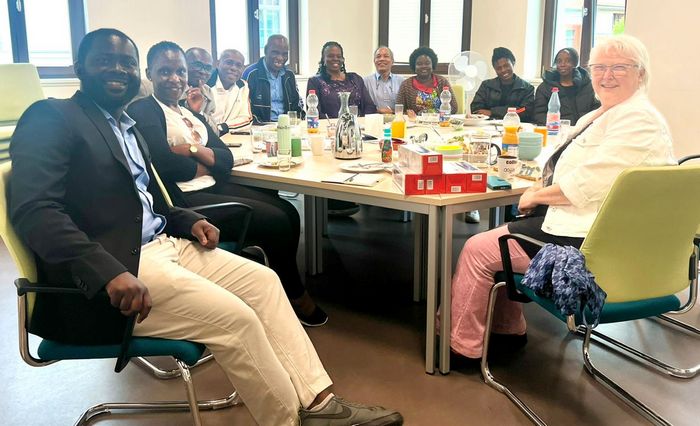
As part of the programme, the students had the opportunity to present their preliminary research findings and engage with visiting CoSuDAf faculty members, including Prof. Stella Madueme, Professor of Development Economics and African/Nigerian Lead Coordinator for the TU Bergakademie Freiberg (Germany) Linkage Programme, and Dr. Veronica Okello, YEMAYA Coordinator at Machakos University, Kenya, alongside other professors from the University of Nigeria, Nsukka. Also in attendance were Dr. Kristina Wopat, Director of the Graduate and Research Academy at TU Bergakademie Freiberg (TUBAF), and Dr.-Ing. Martin Mensah, Sustainability Specialist at the Graduate and Research Academy, TUBAF. The engagement provided a valuable platform for scientific exchange, mentorship, and networking with experienced researchers, fostering international collaboration and further strengthening the students’ research capacity and professional development.
The YEMAYA project is dedicated to advancing gender equity in Science, Technology, Engineering and Mathematics (STEM) by supporting female PhD candidates and strengthening their research capacity. Despite increasing enrolment of women in higher education, significant barriers continue to hinder their progression in STEM careers. These challenges include limited access to funding opportunities, inadequate mentorship, unconscious bias, work-life balance constraints, and underrepresentation in leadership positions.
These factors contribute to the well-documented “leaky pipeline” effect, where the proportion of women progressively declines at successive stages of the academic and scientific career pathway. Although many women enter STEM disciplines, fewer advance to doctoral studies, postdoctoral positions, and senior academic or research leadership roles. Addressing this attrition is essential for fostering inclusive scientific communities and harnessing the full potential of diverse perspectives in solving global challenges.
The fact that only three students from the five partner universities secured positions in the current cohort highlights both the competitiveness of the programme and the continuing challenges faced by women pursuing research careers. Students from the University of Environment and Sustainable Development and the University of Mines and Technology (Ghana), as well as Taita Taveta University (Kenya), were successful in this cohort. No candidates from Machakos University (Kenya) and the University of Nigeria, Nsukka, were selected. In the case of Machakos University, this was primarily because the institution currently has only two female PhD students enrolled, both of whom had already benefited from the programme in previous cohorts. This underscores the need to strengthen the pipeline of female researchers in STEM and expand opportunities for women to pursue doctoral studies and research careers.
Through initiatives such as the YEMAYA Research PhD Traineeship, female scientists are provided with opportunities for international collaboration, advanced research training, and professional development, thereby nurturing a new generation of women leaders in STEM and contributing to sustainable development in Africa and beyond. We extend our heartfelt congratulations to the third cohort and wish them every success in their research endeavours and a productive, enriching, and enjoyable stay in Freiberg, Germany.